RETATRUTIDE


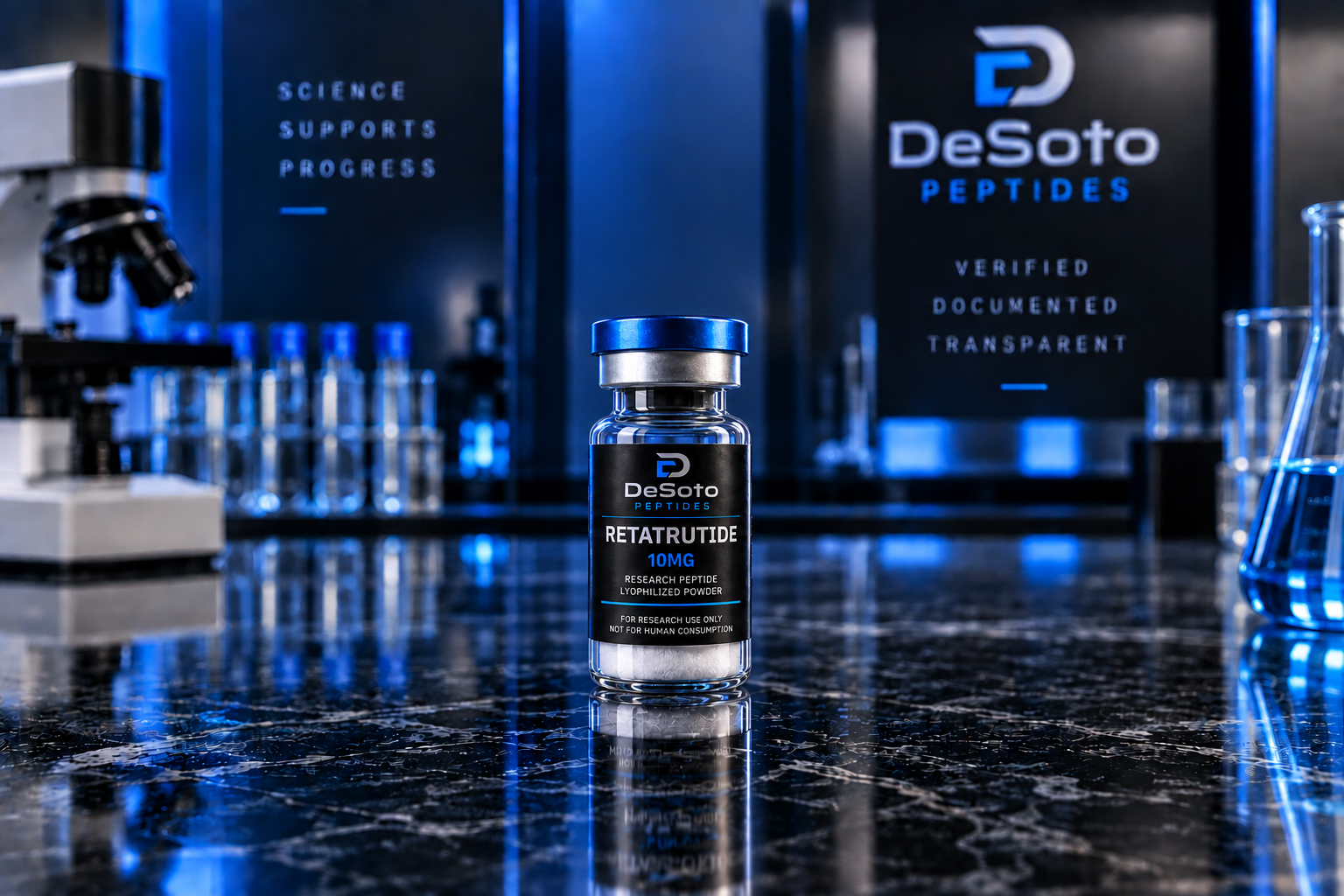
Retatrutide is an investigational peptide studied in preclinical and clinical research for its activity at multiple metabolic receptor pathways. DeSoto Peptides supplies Retatrutide as a lyophilized research material with batch-specific documentation available for verification.

Illustration of a medicine vial with a blue cross symbol on it.

10-50MG PER VIAL

Lyophilized research material

Digital illustration of a microscope with a modern, stylized design in blue and white colors.

RESEARCH GRADE

Lot-specific documentation available

A blue and white shield with a check mark in the center, symbolizing security or protection.

BATCH VERIFIED

For laboratory research only

THREE PATHWAYS. ONE RESEARCH MOLECULE.

A DIFFERENT APPROACH TO METABOLIC RESEARCH

Retatrutide is an investigational triple receptor agonist designed to activate three distinct metabolic signaling pathways: GLP-1, GIP, and glucagon receptors. This combination has made retatrutide an important subject of ongoing research into metabolic regulation, energy balance, and related biological processes.


Illustration of the GLP-1 hormone molecule glowing blue on a black background with the label 'GLP-1' above it.
A digital illustration of a purple protein structure with the word 'GIP' glowing above it, set against a black background.

Glucose signaling
Appetite regulation
Gastric emptying

Insulin signaling
Nutrient metabolism
Energy balance

A digital illustration of a molecular structure labeled 'GLUCAGON' in glowing green text, with the molecule depicted as a cluster of rounded shapes on a black background.

Energy expenditure
Substrate utilization
Metabolic regulation

WHAT THE RESEARCH SHOWS

Clinical research has evaluated retatrutide across multiple doses and study durations, with studies examining its effects on body weight and metabolic outcomes in adults with obesity or overweight.
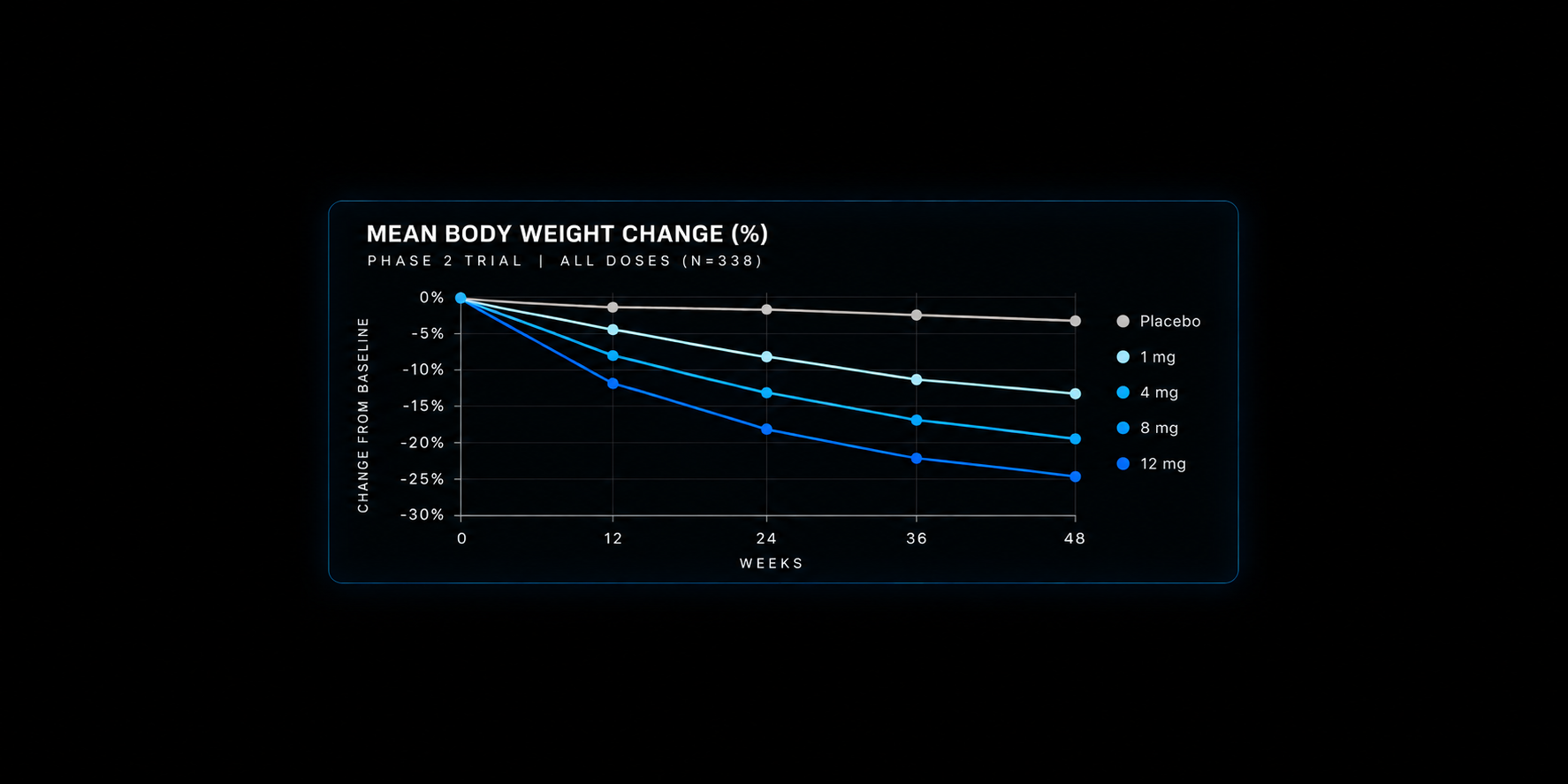
Graph showing mean body weight change percentages over 48 weeks for a phase 2 trial with different doses of medication and placebo. The y-axis represents percentage change from baseline, ranging from 0% to -30%. The x-axis shows time in weeks at 0, 12, 24, 36, and 48 weeks. The graph uses color-coded lines: gray for placebo, light blue for 1 mg, slightly darker blue for 4 mg, darker blue for 8 mg, and darkest blue for 12 mg. Higher doses show a greater reduction in body weight over time.

Phase 2 clinical research demonstrated dose-dependent reductions in body weight over 48 weeks, with the highest studied dose producing a mean reduction of 24.2%.
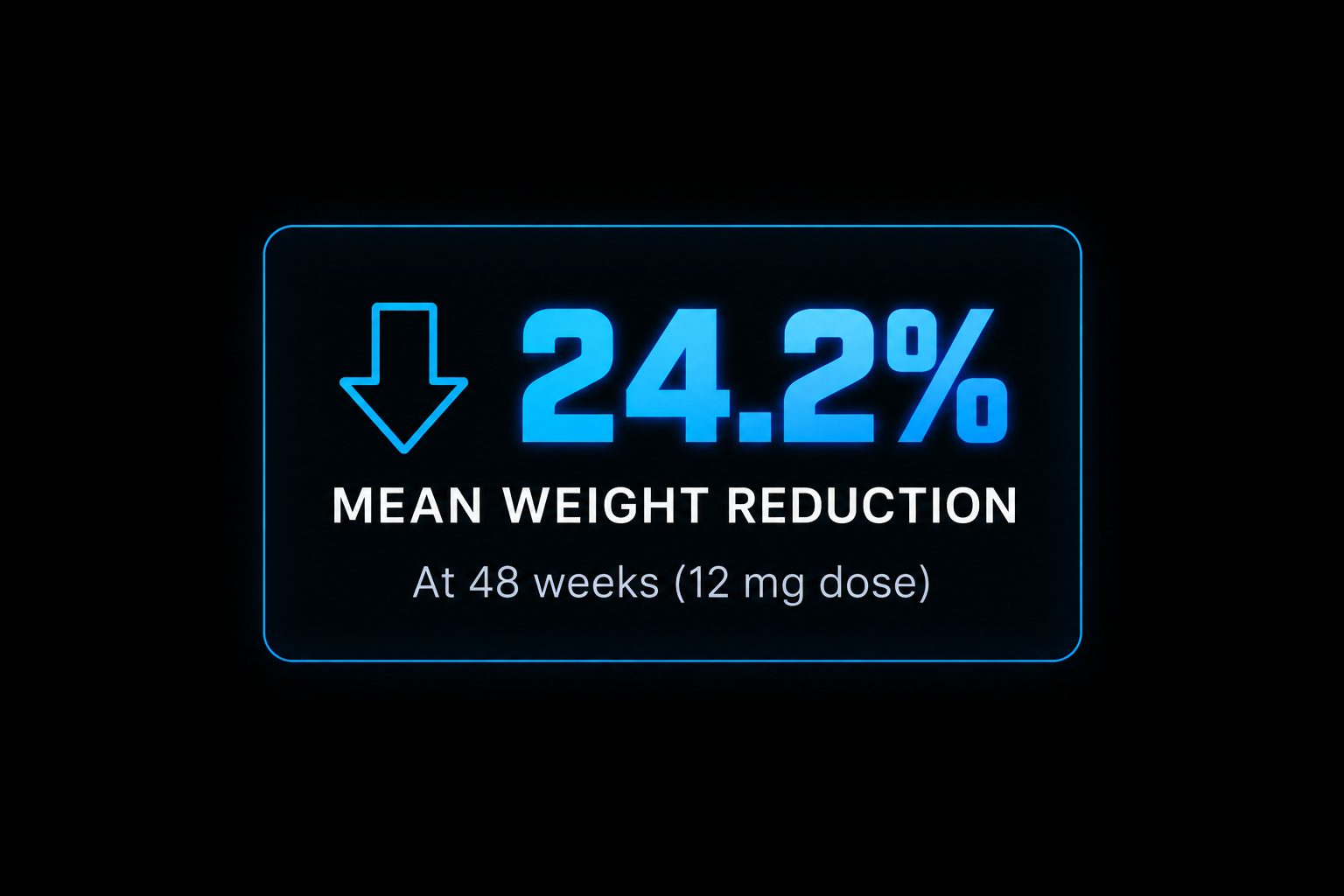

Digital display showing a 24.2% mean weight reduction at 48 weeks with a 12 mg dose, indicated by a downward arrow.
Neon sign displaying '48 WEEKS' in blue, 'PHASE 2 STUDY' in white, and further details about a study involving adults with obesity or overweight, with a sample size of 338.
Neon sign displaying the logo and title of The New England Journal of Medicine on a black background.
Neon sign stating 'Peer Reviewed' for 'New England Journal of Medicine,' authored by Jastreboff et al., published in 2023, with journal citation 'N Engl J Med 389:514-526'.
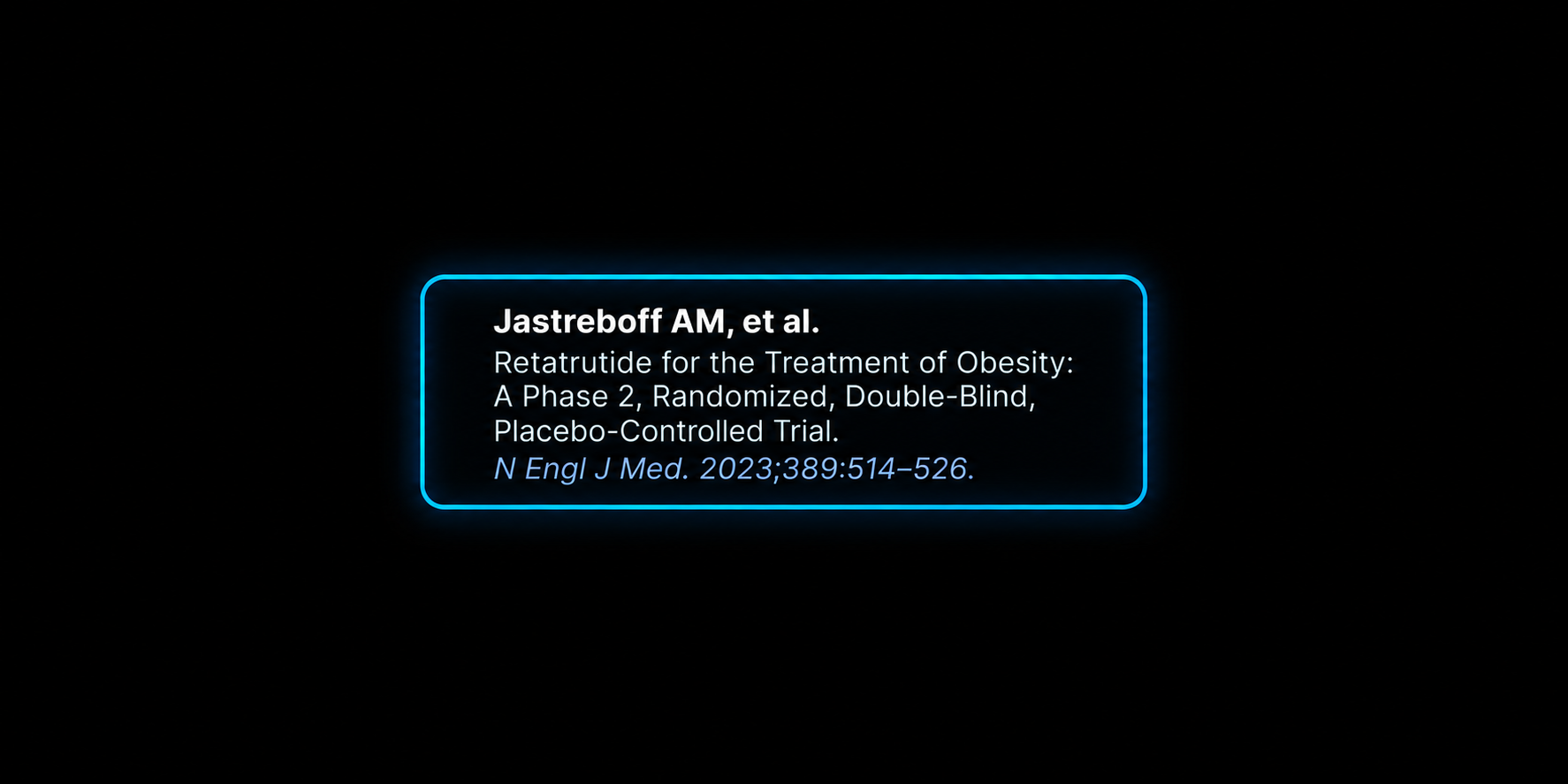
Neon sign displaying a research article reference for a clinical trial on obesity treatment, authored by Jastreboff et al., published in the New England Journal of Medicine in 2023.

RETATRUTIDE 10-50MG

Research material with batch-specific documentation.

For research use only. Not for human consumption